
When compared to conventional vapor-compression air conditioning systems, Vapor Absorption Machines (VAMs) are being seen as a more environmentally friendly option. But what exactly is the science behind these gadgets? Explore the nuances of VAM technology with me.
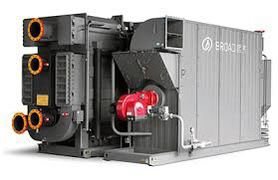
The fundamentals of refrigeration are crucial to comprehending VAMs. The essence of refrigeration is the transfer of heat. This is accomplished by repeatedly subjecting a refrigerant to the processes of evaporation and condensation.
In order to move the refrigerant around, VAMs use a thermally powered cycle, as opposed to the
electrically driven compressor used by conventional systems. A detailed explanation is as
follows:
The heat in the surroundings is transferred to the refrigerant through evaporation as the VAM's
water refrigerant evaporates at low pressure. As a result, temperature drops.
In this step, a solution (usually a water-lithium bromide mixture) absorbs the vaporized
refrigerant. A little quantity of heat is given off during this absorption process, making it
exothermic.
The vapor of the refrigerant is driven off by heating the solution, leaving a more concentrated
solution. It's important to note that waste heat from other processes, solar heat, or direct
fire can all be used as heat sources.
The vapor of the refrigerant is then condensed, dissipating the heat it has absorbed. Typically,
this heat is either wasted or released into the environment.
The high-pressure liquid refrigerant is released through an expansion valve, where its pressure
and temperature drop before the cycle restarts.
VAMs can make efficient use of waste heat, which is otherwise wasted. As a result of this
capability, significant energy savings are possible.
When using a renewable or waste heat source, VAMs can have a lower environmental impact. Water
is used as a refrigerant, a non-toxic substance that has a low potential for environmental harm.
While the initial investment may be greater, running costs, especially in terms of energy use,
may be far cheaper during the machine's useful lifespan.
Although VAMs have many advantages, some problems can arise:
The initial cost of a VAM system is typically higher than that of a more conventional system.
The availability and quality of the heat source have a significant impact on the VAM's
efficiency and operation.
Due to their increased complexity, VAMs typically necessitate specialized knowledge for both
their design and operation.
Vapor absorption machines are an example of the cutting-edge research being conducted in the HVAC field. Technologies like VAMs stand out as possible answers to our cooling demands as the focus worldwide moves toward sustainability and energy efficiency. VAMs have the potential to radically alter the course of AC and refrigeration technology if they are studied, designed, and used correctly.